Recycling and Sustainability — House Clearance Great Bookham
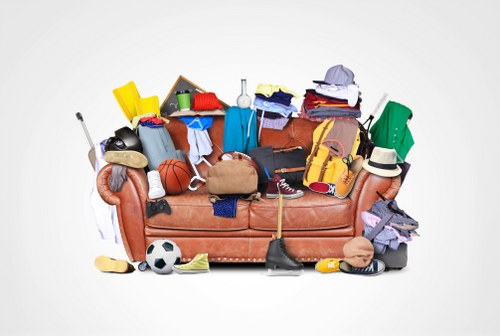 House Clearance Great Bookham is committed to an eco-first approach to rubbish removal across Great Bookham and surrounding Surrey parishes. Our sustainable rubbish area policy sets out clear, measurable targets, practical local partnerships and low-carbon logistics to ensure that every clearance aims for reuse and recycling before disposal. We describe how our Great Bookham house clearance services align with local waste strategies and how residents can expect responsible, transparent handling of materials.
We have set a bold recycling percentage target: a minimum of 85% diversion from landfill for reusable and recyclable items recovered during house clearances. This target covers items we process for direct reuse, donation, authorised resale, and materials sent to fermentation, mechanical recycling or energy recovery where appropriate. As part of our pledge, each job is assessed to maximise salvageable items, and we prioritise repair and redistribution over disposal.
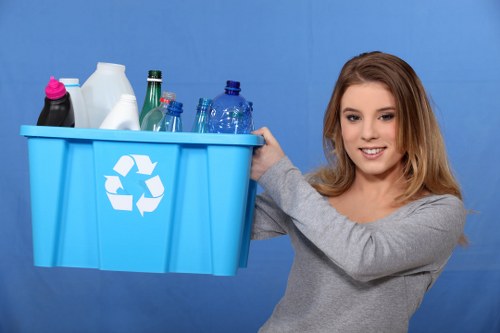 Our approach recognises the local boroughs' waste separation routines — many Surrey authorities operate kerbside collections that separate glass, paper, mixed dry recycling and food waste — and we mirror those streams where possible during initial on-site sorting. By following the boroughs' approach to waste separation and working with local transfer stations, we reduce contamination and improve recycling outcomes for house clearances in Great Bookham and nearby areas.
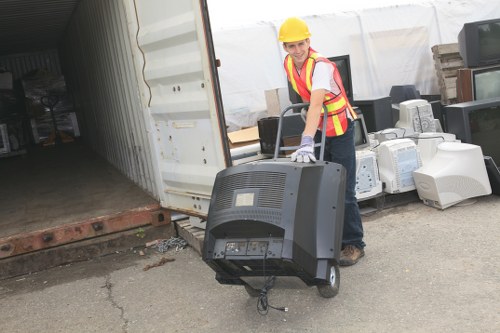
Local transfer stations and authorised processing
We use authorised local transfer stations and household waste recycling centres (HWRCs) operated by Surrey County Council and neighbouring districts to ensure materials are processed correctly. These transfer stations handle bulky waste, segregated recyclables, and controlled materials under licensed conditions. Where specialised treatment is required — such as for white goods refrigerants, electrical equipment or hazardous small items — we route those items to certified contractors to comply with environmental regulations and the Waste Hierarchy.Partnerships with charities and community reuse
Strong partnerships with charities and social enterprises are central to our reuse-first model. We collaborate with local charity shops, community reuse centres and national organisations that operate in the Surrey area to ensure furniture, usable household items, textiles and books are offered for reuse. Donating to charities not only supports local services but also extends the life of items that would otherwise be discarded. When items are unsuitable for direct reuse, they are assessed for parts recovery or material recycling.To formalise this, we maintain a network of charity partners and reuse outlets that accept regular consignments from house clearances. These relationships help us convert clearances into community benefit and reduce the environmental footprint of removals. Every donation is logged and tracked where possible, improving transparency and ensuring the right end-destination for goods.
Low-carbon vans and logistics
We operate a fleet of low-emission vehicles, including hybrid and electric vans, to reduce the carbon intensity of our Great Bookham house clearance operations. Route optimisation, scheduled consolidation of loads and telematics are used to minimise mileage and fuel consumption. For larger jobs where diesel vehicles remain necessary, we prioritise Euro 6 engines and maintain rigorous idling reduction policies to lower emissions.Our logistics approach includes planning collections around local transfer station opening times to avoid double handling and unnecessary interim storage. This reduces fuel use and the time materials spend in transit, improving processing efficiency. Examples of the practical outcomes include fewer trips to landfill, increased direct deliveries to reuse partners and better bulk recycling yields for metals, timber and WEEE (waste electrical and electronic equipment).
What we recycle and how we measure success
We separate and recover a wide range of materials commonly encountered in domestic clearances. Typical categories include:- Furniture and soft furnishings — for reuse or material recovery
- Appliances and electronics — processed through WEEE-compliant channels
- Metals, timber and bulky rigid plastics — sorted for mechanical recycling
- Textiles and books — donated to charity or textile recyclers
- Garden waste and green material — where applicable, sent for composting or bio-processing
Community engagement and continuous improvement
We run community awareness initiatives in Great Bookham to encourage separation at source and to make reuse a visible option during clearances. Collaboration with local councils ensures that our practices complement borough-level policies, such as separate glass and paper collections and food waste streams. We welcome collaboration with council reuse schemes and local volunteers to expand redistribution opportunities.Continuous improvement is embedded in our operations: regular audits of contractor partners, training for crews on on-site segregation, and investment in low-carbon vehicles are all part of our roadmap. By combining regulated disposal through transfer stations, charity partnerships and fleet decarbonisation, our house clearances in Great Bookham aim to set a high standard for sustainable waste management in the area.
Final note: Our commitment to a sustainable rubbish area and eco-friendly waste disposal is practical, measurable and community-focused. Whether it's a single-room clearance or a full house emptying, Great Bookham house clearance services prioritise reuse, support local charities and reduce carbon emissions — delivering responsible clearance with an environmental conscience.
